
Know-how

Since 2000, d.stream has been involved in various software projects in the field of digital signal processing and embedded systems. The projects in the area of software and hardware are supported from the initial idea to series production.

Discover d.stream for programming solutions

Software

Development of embedded software for innovative products using proven and cutting-edge programming technologies.

  1. Real-time applications
  2. Digital signal processing
  3. Embedded / Edge AI
  4. Embedded Security
  5. Multi-Core Software
  6. Drivers, Firmware & System Software
  7. Stable, high-performance, real-time capable in C/C++
  8. Prototypes quickly realized – serial code maintainable in the long term
Software

  1. Embedded Linux (Yocto), TI-RTOS, FreeRTOS, Bare Metal and mixed use
  2. Driver development for sensors & peripherals
  3. Frameworks: PSDK (TI), OpenVX, GStreamer, OpenCV, V4L2
  4. GPU Programming / Overlay (OpenGL ES)
  5. Video pipeline, ISP tuning, display
  6. Runtime optimization down to assembler level
  7. Bootloader (U-Boot, Custom)
  8. OTA/A/B updates, rollback, cloud communication
  9. Setting up CI/CD pipelines
  10. Documentation & handover
  11. PC applications:

    1. HIL / Test software
    2. Control and monitoring of the hardware

Hardware

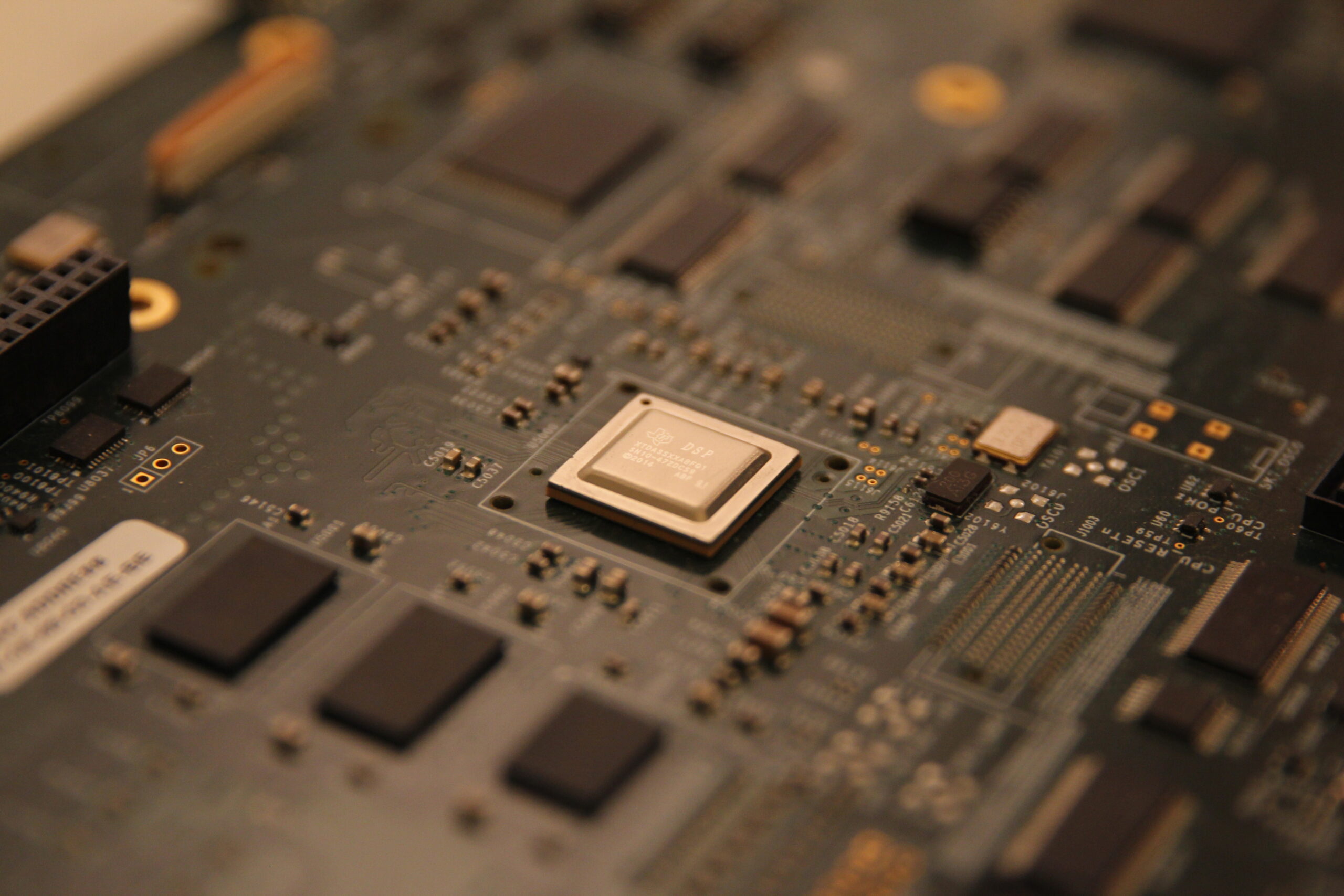
For over 20 years, we have been developing hardware and bringing it to life with real-time software.

  1. System design and hardware development
  2. Optimal implementation of the processor functions
  3. Efficient programming of ARM, DSP, SoC, µC
  4. Specialization in processors from Texas Instruments
  5. Fast prototyping with EVMs
  6. Secure and stable connection of sensors & actuators
  7. Own measurement technology
  8. Commissioning and debugging of customer-specific boards
  9. Development of HW test systems

Hardware

Texas Instruments:

  1. SoC: TDA2, TDA3, TDA4, Jacinto - DSPs: C7x, C6x
  2. Microcontroller MSP430
  3. Image Signal Processor (ISP), LDC, CSI-2
  4. Ser/Des: GMSL/FPD-Link UB92x, UB95x, UB96x
  5. Further hardware and service:

  6. Sierra Wireless AirPrime WP76xx - LTE module
  7. Blackfin, ATmega, 68HC11, 8051
  8. FTDI FT232H USB/SPI converter
  9. Image sensors Fill Factory IBIS5, Micron MT9V022, Omnivision OV10640, Sony IMX290 / IMX390
  10. Network camera Basler BIP2-1280, GigE camera Allied Manta
  11. Schematics review
  12. Development and production of HW prototypes
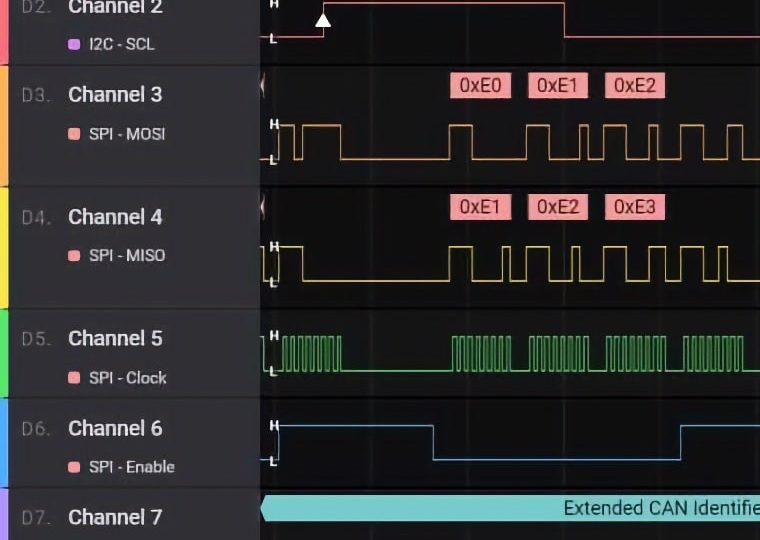
  13. Oscilloscopes / logic analyzers Keysight MSO-X6004A, Agilent MSO7104B

Programming / Languages

  1. Clean, maintainable code is our claim
  2. Optimal programming languages for the right application
  3. Optimal performance for stable runtime
  4. Hardware-related programming for optimal processor utilization
  5. Embedded software to the point
  6. With all common programming languages

Programming / Languages

  1. Strong C/C++ focus
  2. MISRA-C / MISRA-C++ for safety-critical systems
  3. Shell Scripting, Bash, Posix
  4. Assembler, where speed counts
  5. C#
  6. Javascript and Lua for tools & frontends
  7. Python for AI pipelines, tools, test automation
  8. TI-DSP optimization through parallel processing (VLIW)
  9. REACT & jQuery for web frontends

Data transmission

From legacy to high-speed, many interfaces and protocols have already been implemented in projects . d.stream develops stable, high-performance software for efficient communication between hardware components.

  1. Broad experience in data communication
  2. Secure, stable, compatible and with error handling
  3. Securely networked, securely transmitted
  4. Optimization of speed and latency

Data transmission

Network & Protocols

  1. Ethernet, WIFI, Bluetooth, LoRa, 5G
  2. TCP/IP, UDP, HTTP, MQTT, RTSP, WebSocket
  3. VPN, TLS, NTP/PTP (1588)

Serial & Industry

  1. USB, RS232, RS485, SPI, I2C

Camera & Display

  1. MIPI CSI-2, FPD-Link III, GMSL
  2. HDMI, DisplayPort, MIPI DSI
  3. LVDS for displays and sensors (SerDes)

Audio

  1. S/PDIF, TDM, I2S

Automotive

  1. CAN/CAN-FD, LIN

Software tools

Different software tools are required for successful product development, depending on the application and industry:

  1. Development environment
  2. Source code version management
  3. Source code analysis & documentation
  4. Automated testing & CI/CD
  5. Software architecture
  6. Requirements management
  7. Project management

Software tools

IDE & Compiler

  1. TI Code Composer Studio, VS Code, NeoVim, Eclipse
  2. GCC/Clang, TI CodeGen, Linaro
  3. Make, CMake

Version management & Documentation

  1. Git, Gitlab CI, Jenkins
  2. Doxygen, Markdown, reStructuredText, Sphinx

Analysis, Test, Safety

  1. Polyspace, PRQA, Sonarqube
  2. VectorCAST
  3. CANoe

Project management, architecture

  1. Jira / Confluence
  2. Enterprise Architect
  3. DOORS

Technologies and Standards

With every project, familiar but also new technologies and standards are used.

  1. Securely mastering standards in the automotive and industrial sectors
  2. Frameworks for graphics and 3D for a wide range of applications
  3. Operating systems for robotics or IoT
  4. Safety standards for source code
  5. Standards for quality assurance and functional safety
Technologies and Standards

Technologies

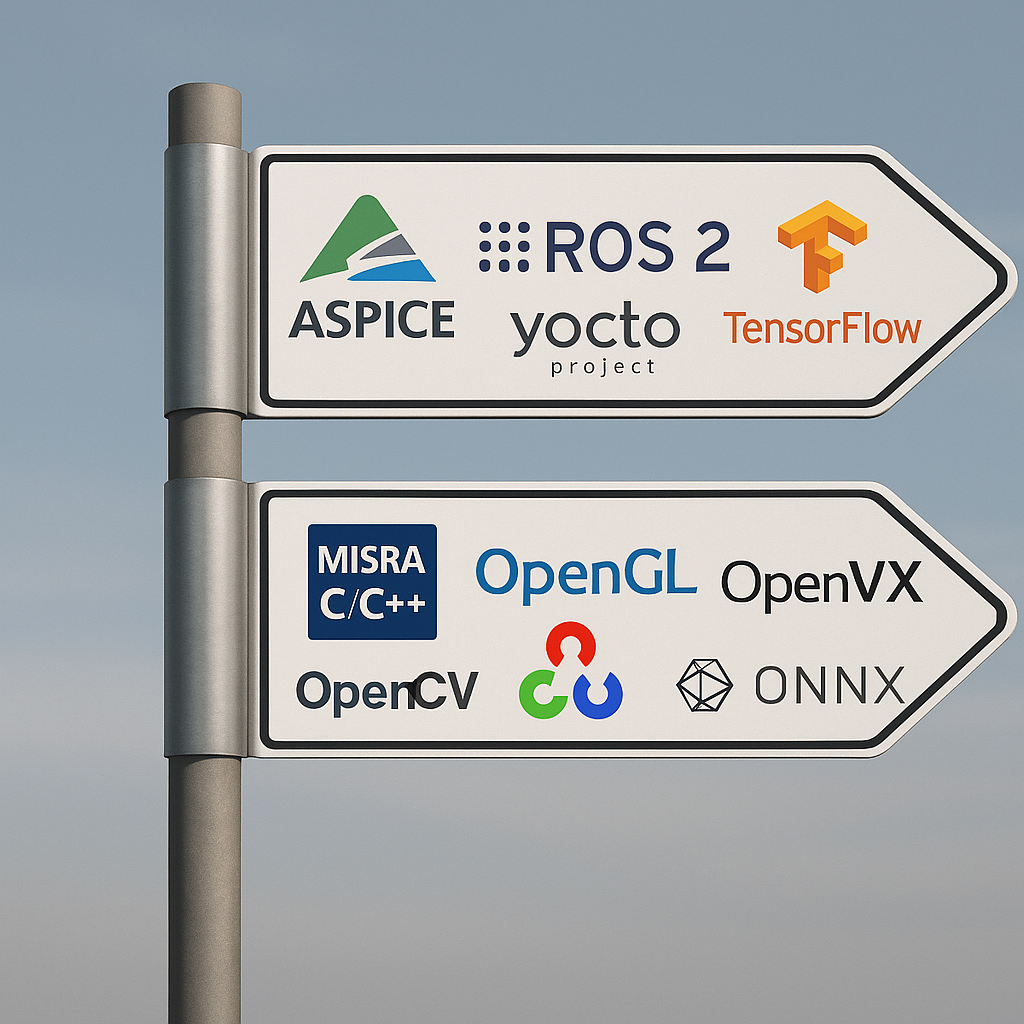
  1. AI: TensorFlow, ONNX, PyTorch
  2. Graphics: openCV, openGL, openVX
  3. Multimedia: GStreamer, FFmpeg
  4. Web: jQuery
  5. Operating systems: Robot Operating System (ROS), Legato for IoT
  6. Yocto
  7. Autosar
  8. MPI - Distributed System Design

Standards

  1. MISRA C/C++
  2. ISO 26262 (ASIL-B/C), ASPICE

Vision AI / Edge AI

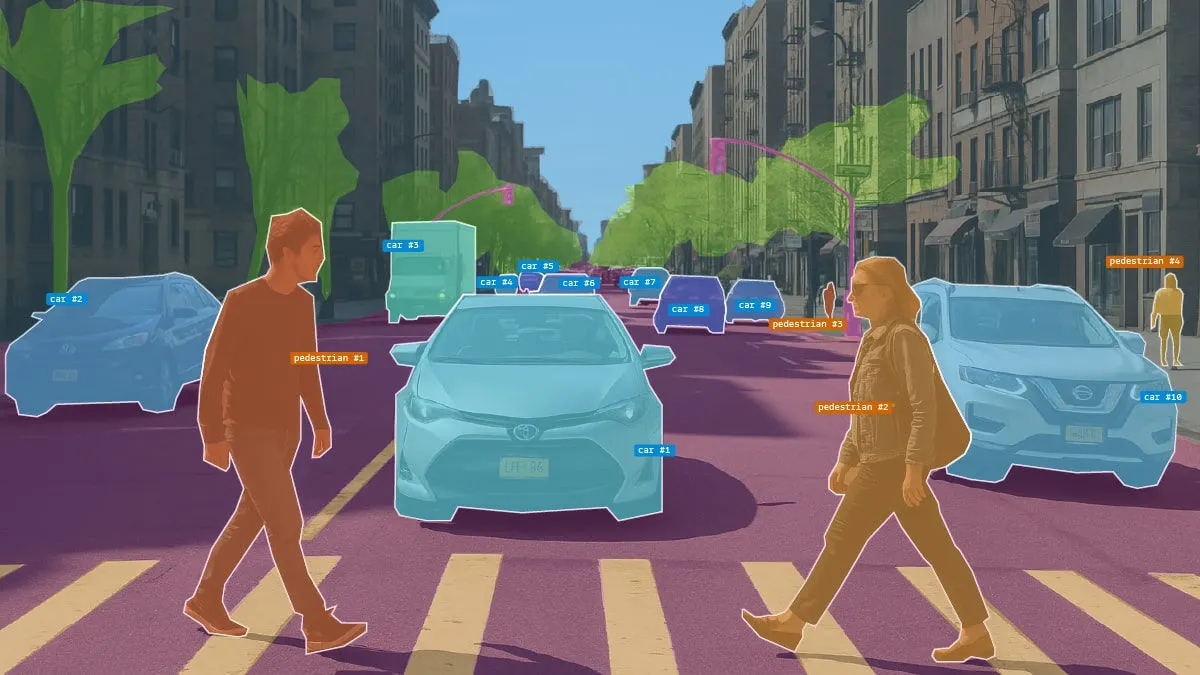
d.stream is diving deeper and deeper into the topic of AI, as the demand for embedded solutions is increasing rapidly.

  1. Vision AI for vehicles, robotics, industry and surveillance
  2. We bring your AI idea to the embedded hardware
  3. Edge AI without cloud dependency
  4. Porting of neural networks to SoC
  5. Combination of classic algorithms & AI
Vision AI / Edge AI

    Applications

  1. Driver monitoring, object recognition, traffic monitoring
  2. Processors

  3. Texas Instruments TDA4, Jacinto (NPU/DSP/GPU)
  4. NVIDIA Jetson
  5. AI Models

  6. YOLOP, UNet, MobileNet, CNNs
  7. Tools & Development

  8. Porting: ONNX/TensorFlow → Embedded
  9. Pipelines: GStreamer, OpenVX, OpenCV
  10. Training with own datasets, optimization for Edge
  11. Optimization of real time and latencies

Soft-Skills

In addition to the know-how of the developers, the mindset and integration into the team are also decisive for success.

  1. Well-coordinated Berlin team with product focus
  2. Proactive, clear communication with our customers
  3. Customers benefit from our 20+ years of experience and our network
  4. Knowledge is contagious with us
  5. Forward-looking, solution-oriented, efficient → budget-saving
Soft-Skills

Our own quality standards drive us → clean, functional embedded development from the start.

  1. 10 experienced developers (SW/HW)
  2. Mixture of senior experts & young talents
  3. Smooth integration of our developers into the customer team
  4. We don't like workarounds, we only do them as a fire brigade operation
  5. Fixed contact person, short distances
  6. Close coordination in customer projects
  7. Clean handover & support up to and after SOP
  8. Fun at and our development – and you can tell

Miscellaneous

Every project and every employee expands the know-how of d.stream.

  1. Broad know-how also in niche areas
  2. Long-standing audio know-how
  3. Public safety radio
  4. Support of product design with 3D printing

Miscellaneous

  1. Audio filter
  2. High-end audio SW/HW
  3. Active Noise Cancelling
  4. Basics of audio data reduction (MPEG, AC3)
  5. Audio multi-channel systems (Dolby Pro Logic, Dolby Digital, DTS)
  6. Terrestrial Trunked Radio (TETRA), Speech Vocoder of digital trunked radio
  7. 3D printing for customized products

Is something missing?

If you have not found any specific knowledge here, please ask.

  1. Can't find your topic?
  2. Our list may not be up to date
  3. We learn quickly & implement new things as well
  4. We quickly implement many topics based on existing experience
  5. Contact us!
CONTACT

Is something missing?

No project is the same, we as developers always learn

  1. Fast onboarding of new SoCs/platforms
  2. Proof-of-concept in a short time
  3. We transfer existing know-how to new platforms
  4. Adaptation of new standards & processes
  5. Quick familiarization with customer systems
  6. Cooperation with customer teams for knowledge transfer
  7. → What is your challenge?

CONTACT

Fast execution. Flexible delivery. Proven engineering expertise.

Frequently Asked Questions (FAQs)

What services does d.stream offer?
For over 25 years, d.stream has specialized in software development for digital signal processing and embedded systems. We offer comprehensive solutions and support our renowned clients in product development from the initial idea to series production.
Our expertise encompasses both software and hardware development, enabling us to guarantee our clients a reliable, competent, and long-term partnership.
Depending on the requirements, we take on:
  • System design
  • Software architecture
  • Firmware development
  • System software
  • Test software
From which project phase does d.stream support its clients?

d.stream supports embedded projects from the early concept and architecture phase and accompanies them through pre-development and implementation to series maturity.

d.stream often joins projects when technical risks are high, existing systems need to be stabilized, expanded, or scaled, or critical development phases require additional expertise.

Which industries does d.stream engineering serve?
d.stream has been developing embedded software and system solutions for demanding, technology-driven industries for over 25 years.
Over the course of more than 25 successful product developments, clear focus areas have emerged.

The most important industries and application fields include:

  • Automotive
    ADAS, Camera-Mirror Systems (CMS), camera-based assistance systems
  • Embedded AI & Computer Vision
    Object recognition, environment perception, autonomous functions
  • Industrial Image Processing & Video
    Smart camera systems for industrial applications
  • Agricultural Technology (Smart Farming)
    Camera-based analysis and assistance systems for agricultural vehicles
  • Traffic Monitoring
    Radar-based speed and measurement systems
  • Railway Technology & IoT
    Measurement and monitoring systems for railway infrastructure
  • Audio & Acoustics
    Active Noise Cancelling (ANC), high-end audio systems
  • Robotics
    Mechanics, software development, and system integration with ROS 2
  • Medical Technology
    Embedded systems for specialized medical applications
What is ADAS and how does the automotive industry benefit from it?

ADAS (Advanced Driver Assistance Systems) are intelligent systems for driver support. Our focus is on the development of camera-based solutions that classify objects and hazards in Vision-AI (AI-supported image processing) real time.

Our focus areas include high-precision Camera Mirror Systems (CMS), which replace conventional exterior mirrors with digital vision solutions, as well as surround view systems for 360° environment detection.

The benefits for the industry:

  • AI-supported precision: Through Vision-AI, vehicles achieve a new level of object recognition and decision-making reliability.
  • Digital Innovation: CMS reduces air resistance (efficiency) and improves visibility at night or in rain.
  • Safety & Compliance: Camera-based AI is the key to meeting the strict EU safety regulations for new vehicle registrations.
  • Future-proof: These technologies form the indispensable foundation for semi- and fully autonomous driving.
What is ADAS and how does the automotive industry benefit from it?

ADAS (Advanced Driver Assistance Systems) are intelligent systems for driver support. Our focus is on the development of camera-based solutions that classify objects and hazards in Vision-AI (AI-supported image processing) real time.

Our focus areas include high-precision Camera Mirror Systems (CMS), which replace conventional exterior mirrors with digital vision solutions, as well as surround view systems for 360° environment detection.

The benefits for the industry:

  • AI-supported precision: Through Vision-AI, vehicles achieve a new level of object recognition and decision-making reliability.
  • Digital Innovation: CMS reduces air resistance (efficiency) and improves visibility at night or in rain.
  • Safety & Compliance: Camera-based AI is the key to meeting the strict EU safety regulations for new vehicle registrations.
  • Future-proof: These technologies form the indispensable foundation for semi- and fully autonomous driving.
Which programming languages are most commonly used at d.stream?

d.stream uses different programming languages depending on the platform, performance requirements, and project phase.
The focus is clearly on hardware-related and high-performance embedded development.

Typical programming languages include:

  • C / C++
    Central languages for hardware-related embedded software, drivers, operating system-related components, and performance-critical algorithms
  • Assembler
    For time-critical routines, DSP-related optimizations, and special cases with the highest performance requirements
  • Python
    For prototyping, test automation, tools, and development support
  • JavaScript
    For accompanying tools, visualizations, or interfaces, e.g., in the context of UI- or web-based components
  • Lua
    For scripting, configuration logic, or flexible runtime control in embedded systems

Through this combination, d.stream can meaningfully combine system proximity, performance, and flexibility within a project.

Which Software Tools and Development Environments Does D.Stream Work with?

d.stream works with a wide range of professional development environments, frameworks, and tools that are tailored to the requirements of demanding embedded and system projects.
The selection of tools always depends on the platform, project phase, and target system.

Typical development environments and tools include:

  • Embedded and toolchain-specific IDEs
    Code Composer Studio (Texas Instruments), VisualDSP++, CodeWarrior
  • Development and build environments
    Vim / NeoVim, Bash, platform-related build and debug workflows
  • System and application development
    Microsoft Visual Studio, MATLAB
  • Version control & collaboration
    Git, SVN
  • Graphics, vision & acceleration
    OpenGL, OpenCV, OpenVX
  • Robotics & Middleware
    ROS 2

This variety of tools enables d.stream to efficiently combine hardware-related embedded development, algorithmic development, and system integration – from pre-development to series maturity.

With which hardware platforms does d.stream develop?

d.stream develops embedded systems on a variety of established hardware platforms.
The focus is on high-performance DSP and SoC architectures for signal- and data-intensive applications.

Typical platforms and architectures include:

  • Texas Instruments DSPs
    C64x+, C66x, C67x and related architectures
  • Texas Instruments SoCs
    TDA2, TDA3, TDA4, AM571x and other multicore platforms
  • ARM-based architectures
    Cortex-M3, M4 as well as Cortex-A15, A53, A72
  • NXP SoCs
    i.MX 8M Plus
  • STMicroelectronics Platforms
    Various microcontrollers
  • Microcontrollers
    ATmega (Atmel), MSP430 (TI), 8051 derivatives
  • IoT- & Connectivity Platforms
    Sierra Wireless AirPrime WP76xx

This platform diversity enables d.stream to optimally match hardware and software architecture to the respective application, performance requirements, and lifecycle goals.

Which Communication Protocols and Interfaces are Supported by D.Stream?

d.stream works with a wide range of established communication protocols and hardware interfaces for embedded systems.
The focus is on reliable, high-performance, and real-time communication in demanding applications.

Typical protocols and interfaces include:

  • Network and IP-based communication
    Ethernet, TCP/IP, UDP, HTTP, RTSP
  • Serial and board-related interfaces
    SPI, I²C, RS-232
  • Audio and multimedia interfaces
    I²S, S/PDIF
  • Vehicle and industrial communication
    CAN

Depending on the application, d.stream takes on the integration, driver development, protocol adaptation, and performance optimization of these interfaces on RTOS or Embedded Linux systems.

Does d.stream have expertise in the field of audio and pro-audio?

Yes, d.stream has many years of experience in the development of sophisticated audio and pro-audio systems, from hardware-related signal processing to the system integration of complex audio pipelines.

The expertise includes:

  • Pro-audio hardware development
    Hardware-related development and integration of audio systems
  • Digital audio signal processing
    Audio filters, audio effects such as reverb or flanger, as well as performance-critical signal paths
  • Active Noise Cancelling (ANC)
    Development and optimization of active noise cancellation systems
  • Audio data compression
    Implementation and integration of methods such as MPEG-Audio and AC-3
  • Multi-channel audio systems
    Development and integration of complex multi-channel audio architectures (e.g., Pro-Logic-, Dolby- or DTS-based systems)

Through the combination of DSP know-how, system understanding, and hardware proximity, d.stream realizes high-performance, low-latency, and series-ready audio solutions.

Does d.stream work in the field of robotics?

Yes, d.stream has practical experience in the development of robotic systems and combines mechanics, electronics, embedded software, and vision into functional overall systems.

The implemented contents include:

  • In-house development of a robot arm
    Mechanics-related system design and integration
  • Motor control and regulation
    Control and coordination of multiple axes
  • Robot Operating System (ROS 2)
    Development and integration of ROS-2-based software architectures
  • Vision-supported applications
    Stereo camera systems and object recognition using Vision-AI
  • Demonstrators and automation
    Implementation of applications in which objects are autonomously recognized and moved from A to B

Through this interdisciplinary approach, d.stream is able to implement robotic functions from the sensor technology to the motion execution.