
References - Overview
Real solutions. Proven success. Discover how d.stream drives innovation.
Learn how d.stream writes success stories with customized technologies.
Excerpt from the reference list of d.stream engineering

TAKATA AG
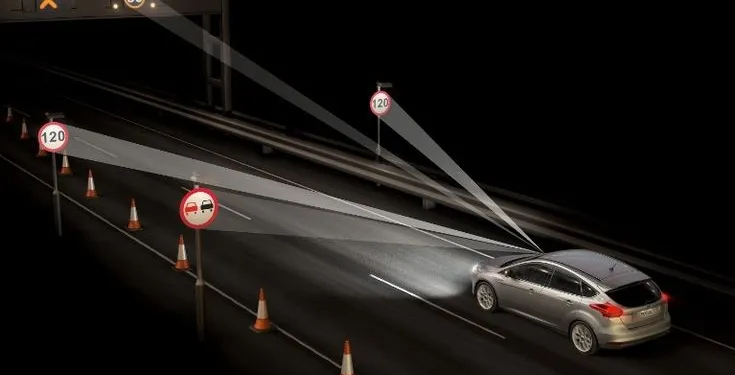
Driver Assistance System (ADAS) for traffic sign recognition
Development of a driver assistance system (ADAS) for the recognition of traffic signs based on a stereo camera.
d.stream developed a complete software framework for the DM8148 multicore processor from Texas Instruments with the SYS/BIOS real-time operating system.
This included the entire video pipeline, system software and the interface for connecting the vision algorithm.
DR. SCHWAB INSPECTION GMBH
CD/DVD production testing system
The terminal device is used in the production of CD/DVD blanks to detect material or production defects using various cameras and sensors.
A communication driver for a multi-DSP system was developed. Five TI C6414 DSPs were used.

FUNKWERK KÖPENICK GMBH
TETRA vocoder for the digital public safety radio standard
Porting and optimization of an existing TETRA vocoder on a C5510 DSP from Texas Instruments.
“CUSTOMER: […] Thanks to its use, the vocoder’s runtime was reduced by 50% and the general stability of our application was improved.”

TIER-1 IN THE AUTOMOTIVE SECTOR
Camera Mirror System for trucks and supercars
Pre-development and series development of two camera-based exterior mirrors, also known as virtual exterior mirrors, Camera Monitor System (CMS) or Camera Mirror System (CMS).
d.stream supported the customer’s development department for six years and played a key role in the development of the products with up to five d.stream employees.
The software development included the entire video pipeline, the firmware, the bootloader and the build system for the TDA3 and TDA2p SoCs from Texas Instruments.

CUSTOMER IN THE FIELD OF TRAFFIC MONITORING
Radar speed measuring device
Runtime optimization of a tracking algorithm was carried out because the customer was blocked in the further development of his product.
The algorithm ran on the DSP TI C6424 from Texas Instruments and was optimized in terms of software and hardware.
Result for the customer:
- Feared hardware redesign avoided
- Costs saved
- Runtime reduced to 20% –> Performance increased
- Algorithm could be further improved by the customer

CUSTOMER IN BERLIN
Multi-room audio system
Within the scope of this project, hardware commissioning was carried out and the system and application software for a 16-bit DSP and an 8-bit microcontroller were implemented. The following functions were programmed for the DSP: Network I/O,…

CUSTOMER IN THE FIELD OF INDUSTRIAL SENSORS
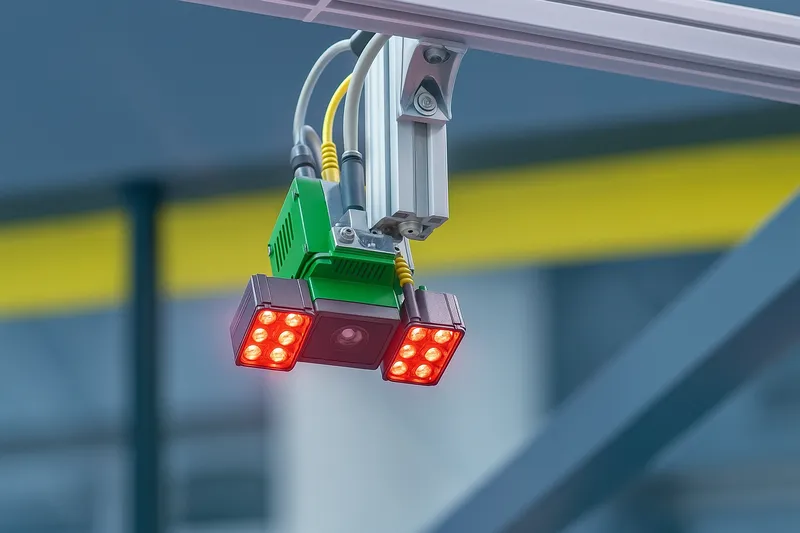
Smart camera system / multi-code scanner
A C6713 from TI was used in this project. The DSP software for the firmware update was optimized. This also included the integration of the TCP/IP stack from d.SignT. As a result…

ANOCSYS AG
Active Noise Cancelling - System
Software development for a multi-DSP system with three C6727s from TI. Expansion and optimization of inter-DSP communication. Creation, optimization…

CUSTOMER IN BERLIN
Infrared camera with MPEG recording
The DM642 DSP from Texas Instruments was used for the industrial camera system. Commissioning was carried out on the hardware developed by the customer. The software development included the following components: Software architecture under DSP/BIOS – Video driver for input and output using the video ports and the EDMAs for different…
CUSTOMER IN BERLIN
Data-Matrix industrial camera
Reader for the Data Matrix Code (2-dimensional barcode) with 26 evaluations per second. Driver programming on the TI C6211 for video I/O, RS232 communication, flash driver, bootloader and function for software updates via RS232.
TETRA Base Station
A software extension of the TETRA channel assignment in the I/O driver was carried out on the TI-DSP C6701.

Fast execution. Flexible delivery. Proven engineering expertise.
Frequently Asked Questions (FAQs)
d.stream engineering specializes in the development of sophisticated embedded systems with digital signal processing.
As a technology and development partner, we support projects from the initial idea, through architecture and implementation, to series production readiness.
Our services include software and hardware development and cover the following areas, among others:
- Embedded software development on DSP and SoC platforms
- Hardware development and hardware-related system development
- Driver, BSP, and operating system integration (RTOS, Embedded Linux)
- Architecture, optimization, and integration of complex embedded systems
- Support from pre-development to series production
Through this holistic approach, we support our customers in realizing high-performance, robust, and production-ready products.
A Camera Mirror System (CMS) is a digital rear-view mirror system in which conventional mirrors are replaced by external cameras and internal displays.
The camera image is processed in real time and displayed to the driver on displays in the vehicle.
This results in several advantages for the driver:
- Improved dynamic range (HDR)
Significantly better visibility in extreme differences in brightness, e.g., in direct sunlight and strong shadows. - No glare
No direct glare from the sun or headlights of vehicles behind. - Optimized visibility in poor weather conditions
Better visibility in rain or dirt due to recessed camera positions and heated lenses. - Improved night vision
Use of light-sensitive camera sensors for better visibility in the dark. - Better aerodynamics
Reduced air resistance leads to lower fuel consumption or a longer range for electric vehicles. - Increased safety
Possibility of object recognition, driver warning, and assistance functions based on the camera data.
d.stream was involved in the development of CMS solutions for trucks, premium electric vehicles, and super sports cars.
A total of five CMS series developments were supported from pre-development to Start of Production (SOP).
d.stream brings comprehensive experience from the development of several Camera Mirror series products, from pre-development to Start of Production (SOP).
This experience makes it possible to identify technical risks early on and significantly shorten development times.
The concrete added value for our customers lies in the following areas, among others:
- Series experience in CMS projects
Development of five CMS series products across all project phases – from the concept phase to series production readiness. - Proven collaboration with Tier-1 structures
Many years of project experience of d.stream engineers in integrated teams of leading Tier-1 suppliers. - Hardware-related system competence
In-depth expert knowledge of SoCs from Texas Instruments (TDA2+, TDA3, TDA4), including firmware, bootloader, and multicore-IPC. - End-to-end video pipeline
Responsibility for the complete pipeline – from the camera sensor via GMSL / FPD-Link, ISP, and image processing to display control. - Operating systems & Performance
High-performance implementations on RTOS and Embedded Linux, tailored to automotive requirements. - Risk minimization and development acceleration
Use of field-proven architectures and concepts that reduce development risks and accelerate the path from pre-development to series production.
In automotive projects, d.stream aligns its development processes with established industry standards to ensure quality, traceability, and functional safety.
These include:
- Automotive SPICE (ASPICE)
Structured development processes, clear responsibilities, and traceable artifacts throughout the entire project. - MISRA C / MISRA C++
Rule-compliant, robust, and maintainable software development for safety-related embedded systems. - ISO 26262 (functional safety)
Consideration of safety-related requirements, including ASIL classification (e.g., ASIL-B), already at the architecture and system level.
These standards form the basis for production-ready automotive software that can be reliably, maintainably, and safely integrated into complex vehicle architectures.
d.stream has been developing embedded products on processor platforms from Texas Instruments for over 25 years.
The focus is on high-performance DSP and SoC architectures, including the DSP families C55x, C64x, C66x, and C67x, as well as multicore SoCs such as TDA2p, TDA3, and TDA4 for complex vision and signal processing applications.
d.stream is also a registered member of the TI Partner Program.
The following products, among others, have been developed on the basis of these platforms:
- Smart camera systems
- Multi-room audio systems
- Camera Mirror Systems (CMS)
- Stereo cameras for ADAS applications
- Radar-based speed measurement systems
d.stream works on TI platforms down to the hardware and board support level, integrating software, drivers, and system architecture into production-ready overall solutions. RTOS and Embedded Linux are used as operating systems.
Typical focus areas in customer projects include:
- Peripheral and sensor drivers
- Processor and system configuration
- Secure bootloaders and firmware update mechanisms
- CSI-2 video capture drivers
- Lens Distortion Correction (LDC)
- Inter-Process Communication (IPC)
- CAN communication
- GPU-based graphical overlays
d.stream has implemented numerous projects for optimizing computationally intensive algorithms in embedded systems.
One example is the runtime optimization of a tracking algorithm on a TI DSP (C6424).
Through targeted hardware-related code and architecture optimizations, the execution time of the algorithm was reduced by around 80%.
As a result, a planned new hardware generation became superfluous, which saved the customer considerable development costs.